
How to Find Your Undertone: Warm, Cool or Neutral

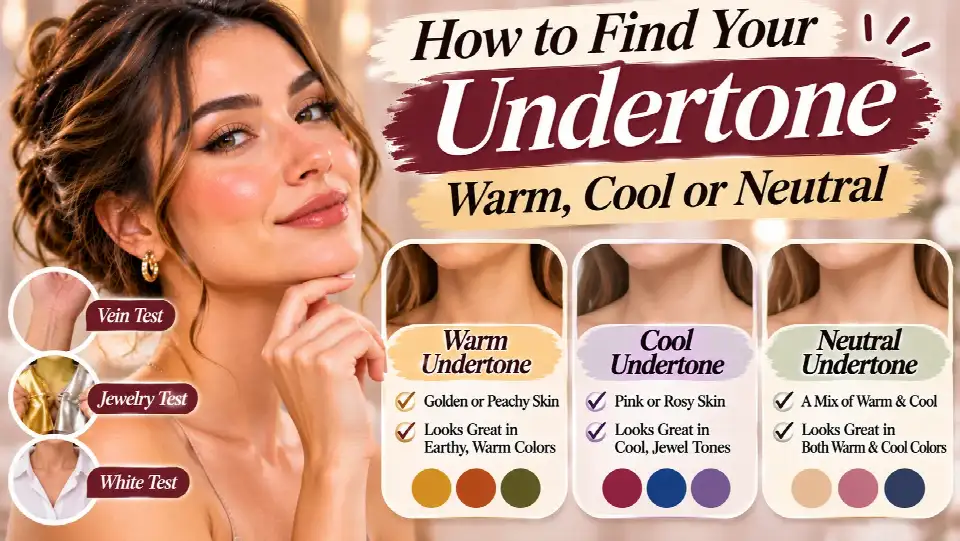
To find your undertone, look at bare skin in natural daylight and try a few quick tests. Blue or purple wrist veins, a pink look against white paper and a preference for silver suggest cool. Green veins, a yellow or golden look and gold suggest warm. A mix of both usually means neutral, and a greenish cast can mean olive.
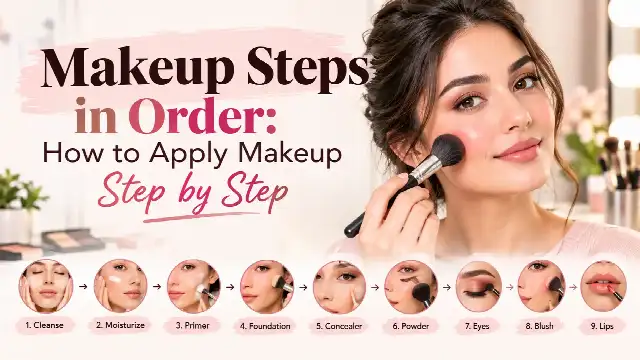
Your undertone is the subtle color beneath the surface of your skin. Unlike your skin tone, which can change with a tan, your undertone stays the same, and it's the key to foundation that disappears and makeup that flatters. If you're building a routine from scratch, see our makeup steps in order.
Skin tone vs. undertone
- Skin tone is how light or deep your skin is: fair, light, medium, tan, deep.
- Undertone is the hue underneath: warm, cool, neutral or olive.
Two people can have the same skin tone and different undertones, which is why the same foundation shade can look perfect on one person and orange or gray on another.
The four undertones
| Undertone | What it looks like | Usually flattered by |
|---|---|---|
| Cool | Pink, red or bluish hints | Silver jewelry; blue-based pinks, berries and plums |
| Warm | Yellow, golden or peachy hints | Gold jewelry; corals, peaches, terracotta and bronze |
| Neutral | A balance of warm and cool | Both metals; most shades |
| Olive | A muted greenish or gray-green cast, often with warmth | Gold or mixed metals; warm neutrals and rich berries |
5 tests to find your undertone
Do these with clean, bare skin in natural daylight, ideally near a window. Use several tests together; one alone can be misleading.
1. The vein test
Look at the veins on the inside of your wrist. Maybelline explains that a green tinge suggests warm undertones and a bluish tinge suggests cool ones. If you see both, you're likely neutral. On deeper skin tones, veins can be hard to see, so rely on the other tests.
2. The white paper test
Hold a sheet of plain white paper or a white T-shirt next to your face. MasterClass explains that skin that looks pinkish against white suggests cool undertones, skin that looks yellow suggests warm, and no obvious cast suggests neutral.
3. The jewelry test
Compare gold and silver jewelry against your skin. Which one makes your skin look brighter and healthier? Gold often flatters warm undertones and silver cool ones. If both look good, you're probably neutral. This one is subjective, so use it to support the other tests rather than decide on its own.
4. The white vs. cream test
Hold up something bright white, then something cream or ivory. Bright white often suits cool undertones, while cream and off-white usually flatter warm ones.
5. The sun test
Think about how your skin reacts to the sun. Skin that tends to burn and turn pink often leans cool, while skin that tans easily and turns golden often leans warm. MasterClass notes that if you burn and tan about equally, you may be neutral. Olive skin often tans easily too.
Never stay in the sun to test this. Simply think about how your skin has reacted in the past.
Is it olive?
Olive undertones are common but often misread. Signs include:
- Foundation shades look either too pink or too yellow, and nothing quite matches.
- Your skin can look slightly gray or greenish in some light.
- You tan easily but rarely look very pink.
If that sounds like you, our guide to makeup for olive skin covers shades made for green undertones.
Using your undertone in makeup
Foundation
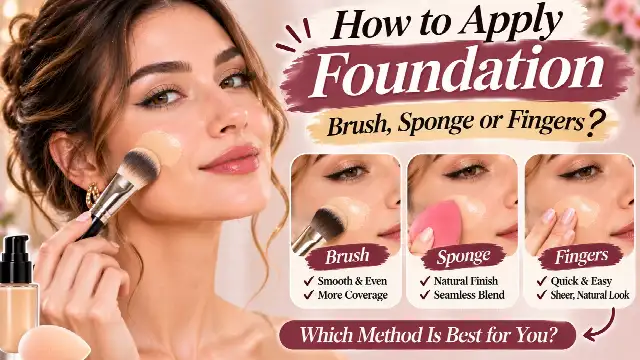
Undertone is the most important factor in finding a foundation that matches. Many brands label shades with letters such as W (warm), C (cool) and N (neutral). Start with your undertone, then match the depth on your jawline. Our guide on how to find your foundation shade walks through it step by step.
Concealer and correctors
Undertone also affects which color correctors help you. Peach and orange correctors cancel blue or purple shadows, while green neutralizes redness. See color correcting makeup for which shade cancels what.
Shades by skin depth
Undertone works alongside your skin depth. For more specific advice, see makeup for fair skin and makeup for dark skin. Your skin type matters too: oily, dry and combination skin need different formulas, which we cover in makeup for your skin type.
FAQ
How do I know if I'm warm or cool toned?
Check your wrist veins, hold white paper next to your face and compare gold and silver jewelry in daylight. Green veins, a golden look and a preference for gold suggest warm. Blue or purple veins, a pink look and a preference for silver suggest cool.
What is a neutral undertone?
A neutral undertone has a balance of warm and cool. People with neutral undertones often see both blue and green veins, look good in both gold and silver, and can wear a wide range of makeup shades.
Can your undertone change?
Your undertone stays the same throughout your life. Your skin tone can change with sun exposure, so you may need a slightly different foundation depth in summer, but the undertone family should stay the same.
Why does foundation look orange or gray on me?
Usually because the undertone is wrong. Foundation that looks orange is often too warm, and foundation that looks gray or ashy is often too cool or too light. Check your undertone, then test shades on your jawline in daylight.
Sources
- How to Identify Your Skin's Undertone, MasterClass (accessed Nov 17, 2026)
- Tips and Tricks for Identifying Your Skin Undertones, Makeup.com (accessed Nov 17, 2026)
- 4 Easy Ways to Identify Your Skin Undertone, Maybelline UK (accessed Nov 17, 2026)
Spotted a mistake or something out of date? Email contact@stylifyo.com and we will check it.