
Business Casual Dress Code: What It Means and What to Wear

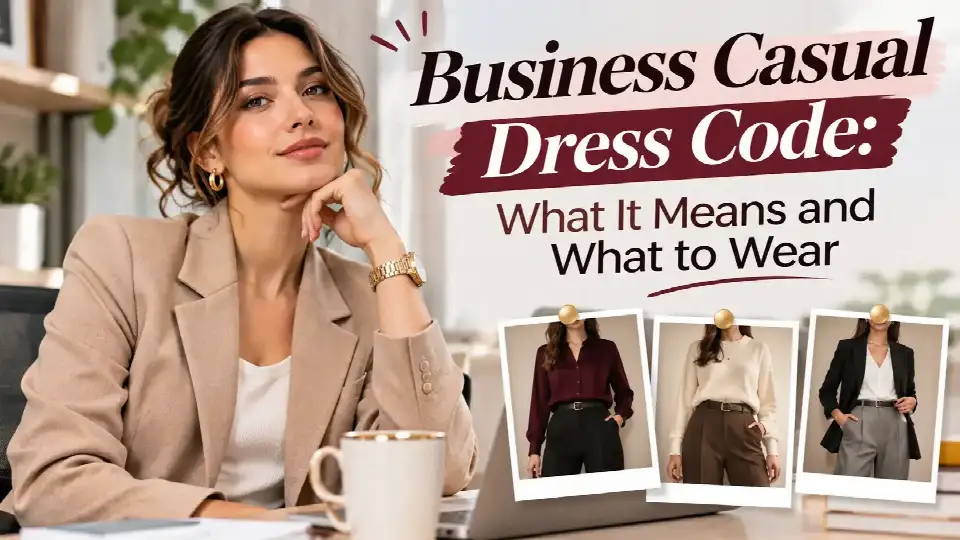
Business casual is a workplace dress code that sits one step below a suit: dress pants, chinos or a knee-length skirt, a collared shirt, blouse or fine knit, and closed-toe leather shoes. A blazer is optional, a tie usually is too, and gym wear, ripped denim and flip-flops are out.
This guide is the full rulebook for business casual at work. You'll get the outfit formulas I use, a quick yes-or-no list for the pieces people ask about most, and how to adjust for your season, your office and your next big work day. If you're still learning the whole ladder of codes, start with types of dress codes explained.
What does business casual mean?
Business casual means professional clothes without the full suit. The Emily Post Institute describes it as "a slight step down in formality from the norm," which is the most useful way to think about it: you dress one notch below what your office would wear to an important meeting.
Duke University's career center places business casual in the middle of its scale of workplace dress, above baseline casual (dark jeans and collared shirts) and below traditional business attire (dark suits). Its business casual list is a good baseline: button-down or polo shirts, fitted blouses, a blazer, sport coat or sweater, slacks or dress pants, knee-length skirts or dresses, and flats, loafers or boots.
Two codes get confused with it all the time:
- Smart casual is a little more relaxed and more about style than office rules. Here's what smart casual means and how it differs.
- Business professional is a step up: a matching suit, dress shirt and, for many men, a tie. Our business casual vs business professional comparison puts the two side by side.
Business casual at a glance
Use this table as your quick check before you get dressed. "Depends" means your office's own policy decides.
| Piece | Yes | Depends on your office | No |
|---|---|---|---|
| Tops | Button-downs, blouses, fine-knit sweaters, polos in casual offices | Plain knit tops, turtlenecks | Graphic tees, tank tops, crop tops |
| Bottoms | Dress pants, chinos, khakis, knee-length skirts | Dark, clean jeans | Ripped denim, athletic pants, short shorts |
| Dresses | Knee-length shirt dresses, sheath and wrap dresses | Sleeveless dresses with a layer | Bodycon, sundresses, anything sheer |
| Layers | Blazers, sport coats, cardigans | Sweater vests, quarter zips | Hoodies, sweatshirts |
| Shoes | Loafers, flats, low heels, leather oxfords and derbies | Ankle boots, plain leather sneakers | Flip-flops, gym sneakers, hiking boots |
| Accessories | Simple watch, belt that matches your shoes, small jewelry | Statement pieces | Anything noisy or distracting |
The basic outfit formulas
Business casual gets easy once you think in formulas instead of single pieces. Every outfit is a top, a bottom, shoes and an optional layer.
For women:
- Blouse + dress pants + loafers or flats + optional blazer.
- Fine-knit sweater + knee-length skirt + low block heels.
- Shirt dress or sheath dress + cardigan or blazer + flats.
For men:
- Button-down shirt + chinos + leather loafers or derbies.
- Polo or fine-knit sweater + dress pants + leather shoes (in a more casual office).
- Open-collar shirt + sport coat + wool or cotton trousers + oxfords.
For full outfit ideas and fit tips, see business casual for women and business casual outfits for men. A tie is the piece men ask about most: in most offices it's optional, and our guide to wearing a tie with business casual covers when it still makes sense.
My rule of thumb: build a small set of pieces that all work together, so you never stand in front of the closet guessing. This business casual capsule wardrobe turns 20 pieces into 30 outfits.
Is it business casual? Item by item
These are the pieces people ask about most. The short answer is in the table, and each guide covers when the piece works, how to style it and when to skip it.
| Item | Short answer | Full guide |
|---|---|---|
| Dress | Yes, if it's knee-length or longer with a modest neckline | Dresses at the office |
| Cardigan | Yes, in a fine knit over a shirt or blouse | Cardigans for work |
| Leggings | Only under a long tunic or dress in relaxed offices | Leggings at work |
| Blazer | Yes, it's the easiest way to dress an outfit up | Blazers for business casual |
| Turtleneck | Yes, in a fine knit and a solid color | Turtlenecks at work |
| Flannel shirt | Only in casual offices, and never as a jacket | Flannel at the office |
| Khakis | Yes, they are a business casual staple | Khakis and chinos |
| Shorts | Rarely, and only if your policy says so | Shorts at work |
| Hoodie | No, except in very casual offices | Hoodies at work |
| T-shirt | Only a plain, fitted tee under a blazer or cardigan | T-shirts for work |
| Joggers | Only tailored joggers in relaxed offices | Joggers at the office |
| Sweater vest | Yes, over a collared shirt | Sweater vests for work |
| Jeans | Only dark, clean denim where your office allows it | Jeans and business casual |
| Polo | Yes, in casual offices and in hot weather | Polos for work |
| Quarter zip | Yes, if it looks like a sweater, not gym wear | Quarter zips at work |
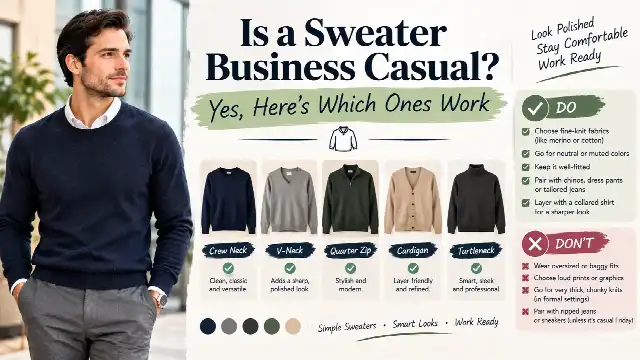
| Sweater | Yes, in a fine knit with a clean neckline | Sweaters for business casual |
Business casual shoes
Shoes decide whether an outfit reads as office or weekend. Leather is the safest choice, and the Emily Post Institute recommends closed-toe shoes wherever a policy uses the word "business."
- Loafers, flats, low heels, oxfords and derbies are always safe.
- Boots work when they're sleek and polished. Here's which boots pass at the office.
- Sneakers are usually a no, but plain leather pairs can work in casual offices. See when sneakers are business casual.
- Sandals and open-toe shoes depend heavily on your office. Read when sandals are OK at work before you wear them.
For specific styles that are comfortable for a full day, see business casual shoes for women and business casual shoes for men.
Business casual through the seasons
The rules don't change with the weather, but the fabrics do. Emily Post notes that dress codes often relax in warmer months, yet how you look still matters to colleagues and clients.
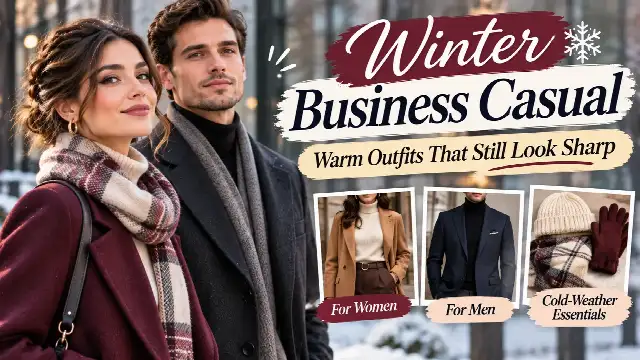
- Winter: wool trousers, merino or cashmere knits, a tailored coat and leather boots. Our winter business casual guide shows how to layer without looking bulky.
- Summer: linen blends, cotton chinos, short-sleeve blouses and breathable dresses. See summer business casual for what stays professional in the heat.
- Rain: water-resistant outer layers and shoes you can wipe clean. Here's what to wear to work on a rainy day so you arrive dry.
Business casual for interviews, new jobs and events
Some days ask for a little more care than a normal Tuesday. Use business casual as your floor, then adjust.
- Job interviews: dress one step above the company's everyday code. Our guide to what to wear to a job interview breaks it down by industry, and virtual interview outfits cover what reads well on camera.
- Career fairs: many universities treat business casual as the minimum and business professional as the safer choice. See what to wear to a career fair.
- A new job: your first day of work outfit should match the most polished people on the team, and what to wear to work orientation covers the training days.
- Conferences: plan for long days and changing rooms with our work conference outfit guide.
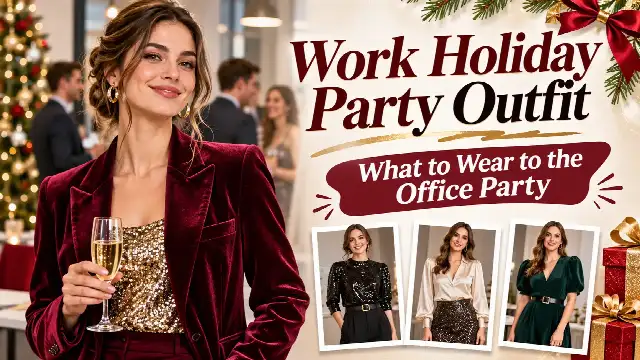
- Office parties: the work holiday party outfit guide shows how to look festive and still professional.
- Pregnancy: stretch fabrics and comfortable shoes still fit the code. Here's what to wear to work when pregnant.
How to read your office's version
Business casual means different things in different places, so read your own office before you follow any list, including this one.
| Office type | What business casual usually looks like |
|---|---|
| Conservative (finance, law, government) | Blazers most days, dress pants, leather shoes, ties for client meetings |
| Standard (most established companies) | Collared shirts, blouses, chinos or dress pants, optional blazer |
| Creative (marketing, media, design) | More color and pattern, dark denim, fashion sneakers in some teams |
| Remote or hybrid | Business casual from the waist up on video, the full code on office days |
Duke's career center links these differences to industry, job title and location, and advises researching a company's culture before you decide. Three checks help:
- Read the written policy. Most employers put the dress code in the handbook.
- Ask about the intent. Emily Post suggests asking whether a relaxed rule covers client meetings or only internal work.
- Watch the people a level above you. What managers wear on an ordinary day is your best guide.
If business casual is only one of the codes you deal with, our what to wear guide covers events, ceremonies and nights out too.
Common business casual mistakes
Most business casual problems aren't about the piece itself. They're about fit and care.
- Clothes that are too tight or too baggy. Fit matters more than the brand.
- Wrinkles, lint and missing buttons. Creighton's career center also says to remove tags and tacking stitches from new clothes.
- Worn-down heels and scuffed shoes. Shoes are the first thing that makes an outfit look tired.
- An untucked shirt with an uneven hem. If it needs tucking, it needs a belt, and the belt should match your shoes.
- Going too casual on a casual day. Emily Post warns that one person's overly casual outfit can lead to stricter rules for everyone.
FAQ
Can you wear jeans for business casual?
Only if your office allows denim, and only in a dark, clean wash with no rips or fading. Pair jeans with a collared shirt, blouse or blazer and leather shoes so the rest of the outfit stays professional. If you're unsure, wear chinos or dress pants instead.
Do you need a blazer for business casual?
No. A blazer is optional in most business casual offices, but it's the fastest way to make an outfit look more polished. Keep one at your desk for surprise client meetings, presentations or days when your plans change.
Is business casual the same as smart casual?
No. Business casual is a workplace code built around professional pieces like dress pants, button-downs and blazers. Smart casual is more relaxed and more about style, so it can include dark jeans, fashion sneakers and casual knits that some offices wouldn't accept.
What colors are best for business casual?
Solid neutrals like navy, gray, black, white, beige and olive are the safest base, and simple patterns like fine stripes work well too. Creative offices allow brighter colors and bolder prints, while conservative offices usually stay with darker, quieter shades.
Sources
- Business Casual Attire, Emily Post Institute (accessed Nov 17, 2026)
- Attire Guide, Duke University Career Center (accessed Nov 17, 2026)
- Business Casual Attire Is Classic Rather Than Trendy, Creighton University Career Center (accessed Nov 17, 2026)
Spotted a mistake or something out of date? Email contact@stylifyo.com and we will check it.